Indigenous Books and America 250 - The 2026 AAS James Russell Wiggins Lecture Delivered By Phillip Round
The Liaisons sub-committee is proud to co-sponsor this lecture.
Location: American Antiquarian Society and Online
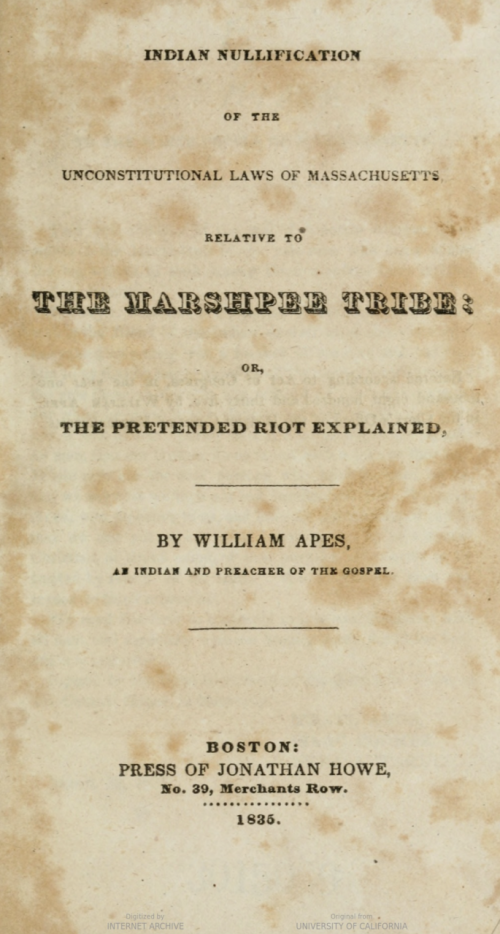
Indigenous Books and America 250
Writing to John Bailey at the end of the Revolutionary War, Samson Occom—the first Native American to publish a book—insisted that “Indians are neither Whigs nor Tories,” emphasizing Native political autonomy in a conflict framed largely in colonial terms. Yet Occom’s perspective on the Revolution was not one of detachment alone. In private correspondence with the enslaved African American poet Phillis Wheatley, he expressed excitement about what an independent United States might mean for both Black and Indigenous peoples. Responding to Occom’s arguments in favor of enslaved peoples’ right to freedom, Wheatley articulated a broader philosophical principle underlying such hopes: “in every human Breast, God has implanted a Principle, which we call Love of Freedom; it is impatient of Oppression, and pants for Deliverance.”
This epistolary exchange between Occom and Wheatley reveals how marginalized figures interpreted the Revolution not simply as a colonial struggle, but as a moment that might extend the promise of liberty beyond white settlers. This sense of possibility, however, was not limited to private correspondence. A few years later, Mahican diplomat Hendrick Aupaumut, while negotiating with Shawnee bands in the Ohio River valley, described how American leaders framed their newfound independence as a model for others. According to Aupaumut, they claimed that “since they have their liberty, they begin with new things, and now they endeavor to lift us up the Indians from the ground, that we may stand up and walk ourselves.”
Taken together, these accounts illustrate a shared—if uneven—expectation that the ideals of the Revolution might extend to Black and Native communities. At the same time, they hint at the tension between that promise and the political realities that would ultimately limit it.
This event is co-sponsored by the Bibliographical Society of America.
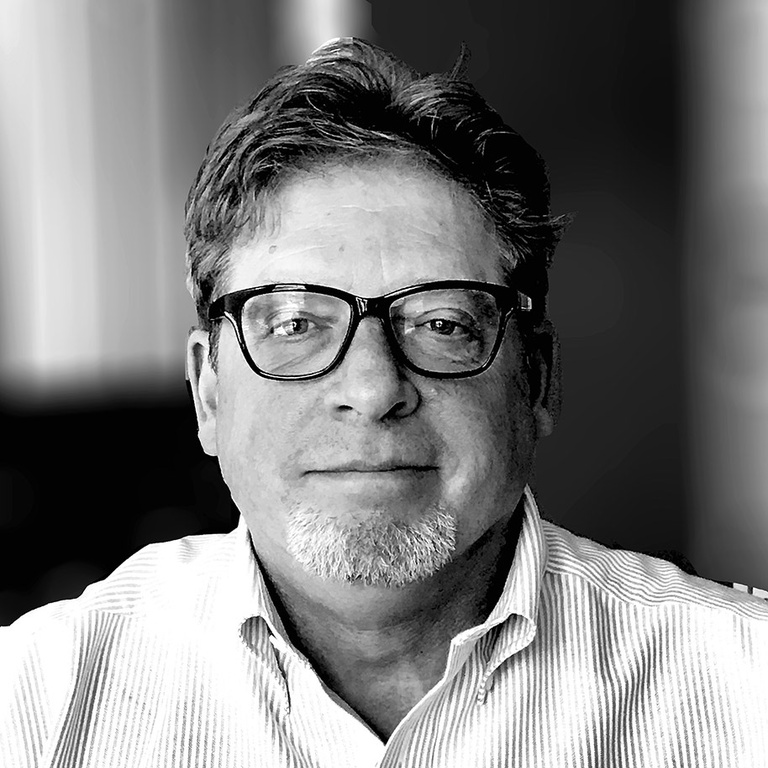
2026 James Russell Wiggins Lecture Presenter
Phillip H. Round is emeritus professor of English and Native American studies at the University of Iowa, and most recently, the author of Inscribing Sovereignties: Writing and Community in Native North America (2024), which received Honorable Mention for the 2025 Early American Literature Book Prize. He was elected to AAS membership in April 2013.
The James Russell Wiggins Lecture in the History of the Book in American Culture features an expert on book history. The lecture was endowed to honor James Russell Wiggins (1903-2000), who served as AAS president (1970-1977), an editor of the Washington Post (1947-1968), United States ambassador to the United Nations (1968-69), and editor of the Ellsworth (Maine) American (1969-2000).